


85% of businesses leveraging CRM automation report a dramatic surge in operational efficiency – yet many organizations still struggle to transform their wealth of customer data into actionable insights. As we navigate 2025, the evolution of CRM automation reporting has fundamentally transformed how businesses understand and engage with their customers. What once required manual data entry and time-consuming analysis can now be accomplished through sophisticated automation tools that deliver real-time insights at scale.
For SMEs, this technological shift represents both an opportunity and a challenge. The pressure to compete in an increasingly data-driven market has made CRM automation reporting not just a luxury, but a critical component of business success.
Modern business intelligence automation systems are now more accessible and powerful than ever, offering SMEs the capability to harness enterprise-level insights that drive growth and customer satisfaction. In this comprehensive guide, we’ll explore the essential elements of CRM automation reporting that every business needs to master in 2025.
From understanding the latest features and implementation strategies to maximizing ROI through advanced analytics, we’ll provide you with practical steps to transform your CRM data into a powerful decision-making engine. Whether you’re just starting your automation journey or looking to optimize your existing systems, this guide will equip you with the knowledge to leverage CRM reporting effectively in today’s dynamic business environment.
The Evolution of CRM Reporting
The journey of CRM reporting has been a remarkable evolution from labor-intensive processes to the seamless automation we see today. Traditionally, CRM systems require significant manual input, including data entry, report generation, and analysis. These processes were not only time-consuming but also prone to human error, resulting in static data that offered limited insights. Businesses struggled to extract meaningful patterns, often leading to missed opportunities and inefficiencies in decision-making.
The rise of CRM reporting tools integrated with automation marked a turning point. By automating data collection, analysis, and reporting, businesses gained the ability to process vast amounts of customer information with precision and speed. These automated reporting systems eliminated the need for manual intervention, freeing up resources and ensuring accuracy in data-driven decisions.
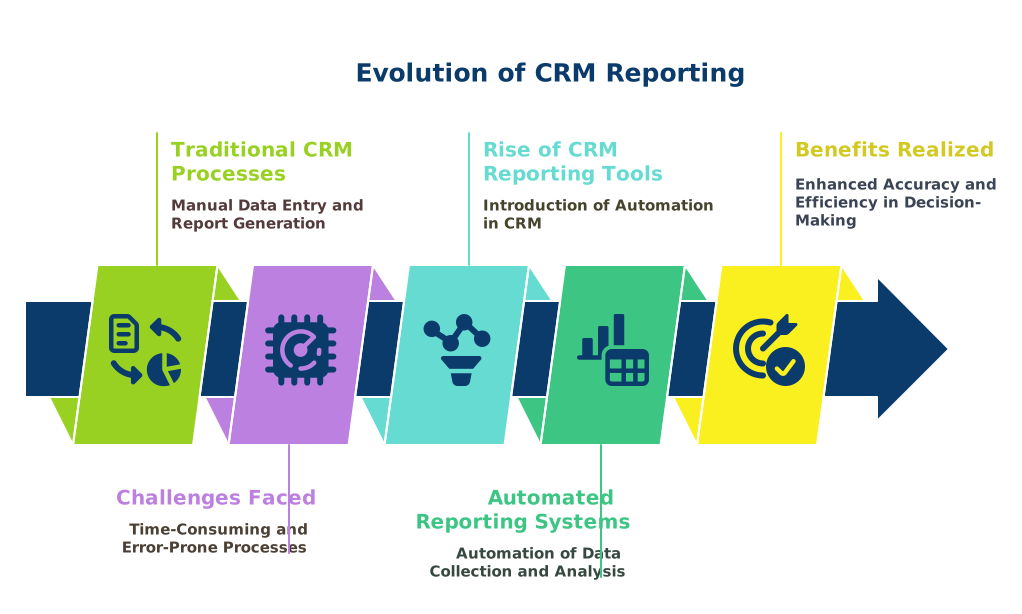
Today, CRM automation has matured into a robust ecosystem offering real-time insights and actionable data. Businesses can now monitor performance metrics, customer behaviors, and sales pipelines with just a few clicks. This transformation has not only improved operational efficiency but also empowered organizations to engage with customers more effectively, driving growth and innovation in a highly competitive market.

Suggested reading:
Optimizing CRM Integration with Third-Party Tools: Maximise Business Efficiency
Key Components of Modern CRM Automation
Modern CRM automation systems are equipped with advanced features designed to transform raw data into actionable insights. As businesses navigate 2025, the following components are indispensable for achieving operational efficiency and informed decision-making:
Essential Features for 2025
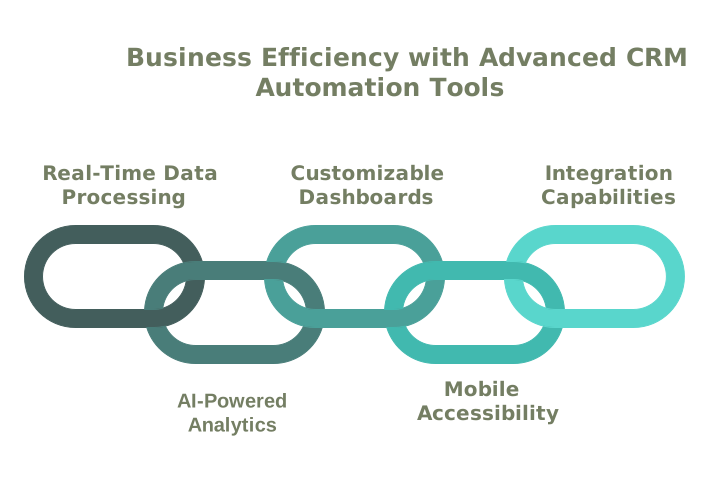
Real-Time Data Processing
Businesses can no longer afford delays in data updates. With real-time reporting, CRM systems provide instantaneous insights, enabling swift, data-driven decisions that keep organizations agile and competitive.
AI-Powered Analytics
Artificial intelligence takes forecasting and trend analysis to the next level. By identifying patterns and predicting customer behaviors, AI empowers businesses to proactively address challenges and seize opportunities.
Customizable Dashboards
Tailored dashboards ensure that every department—be it sales, marketing, or customer support—has access to relevant data at a glance. This personalization improves usability and enhances focus.
Mobile Accessibility
In an era of remote work and on-the-go decision-making, mobile-friendly CRM systems allow leaders to access insights anytime, anywhere.
Integration Capabilities
Cross-Platform Compatibility
Seamless integration with sales, marketing, and support tools ensures that data flows effortlessly across platforms, enabling a unified view of customer interactions.
API Connections
Modern CRM systems leverage APIs to integrate with third-party applications, making it easier to expand functionalities and adapt to evolving business needs.
With these components, businesses can harness sales automation analytics, real-time reporting, and performance dashboards to stay ahead in today’s dynamic marketplace.
Ready to Transform Your Business Operations for 2025?
Achieve peak efficiency and growth with cutting-edge automation solutions tailored to your needs.
Streamline workflows, eliminate manual errors, and boost productivity across every department.
Implementing Automated CRM Reporting
Implementing automated CRM reporting involves strategic planning and execution to ensure your business can leverage its full potential. Here’s a step-by-step guide and key best practices to streamline the process:
Step-By-Step Guide of Automated CRM Reporting Plan
| Step | Action |
|---|---|
| Assessment and Planning | Define your business goals and reporting needs. Determine what insights are most critical to your decision-making process. |
| System Selection | Research and choose a CRM tool that aligns with your business size, objectives, and budget. Prioritize features like real-time reporting and sales analytics. |
| Setup and Configuration | Install the CRM system, integrate it with existing tools, and customize workflows to fit your operations. |
| Team Training | Provide comprehensive training to your team, ensuring they understand how to use the CRM system efficiently and effectively. |
Best Practices to Streamline Automated CRM Reporting
Data Quality Management
Ensure CRM data is accurate and up to date by regularly cleaning and validating entries. Reliable data is the foundation of actionable insights.
Security Considerations
Protect customer data with robust security protocols and compliance measures, safeguarding system integrity.
Performance Monitoring
Continuously review your reporting metrics to identify gaps, track progress, and optimize system usage for better outcomes.
By following these steps and adhering to best practices, businesses can master how to set up automated CRM reporting and achieve enhanced CRM reporting for sales optimization.

Suggested reading:
Microsoft Dynamics CRM for Finance: Solving High Net-Worth Client Management Issues and Enhancing Personalized Service Delivery
Maximizing ROI Through Advanced Analytics
Leveraging advanced analytics in CRM automation can unlock significant ROI by providing deeper insights and streamlining decision-making. Businesses that focus on the right metrics and data visualization strategies can drive growth while optimizing efficiency.

Key Performance Metrics
Customer Lifecycle Tracking
Understand every stage of your customer’s journey. By identifying patterns and risks, such as potential churn points, businesses can proactively implement retention strategies and enhance customer satisfaction.
Sales Pipeline Analytics
Track deals as they progress through the sales funnel. Identify bottlenecks, optimize conversion rates, and ensure resources are allocated to high-priority leads.
Team Performance Metrics
Assess productivity and success rates of sales and customer service teams. Metrics like response time, closed deals, and customer satisfaction scores help fine-tune strategies and reward high performers.
Data Visualization Strategies
Dashboard Design Principles
Craft dashboards that are visually intuitive and tailored to the user’s role. For example, sales teams benefit from live deal tracking, while executives may prefer overviews of KPIs and revenue forecasts.
Report Automation Scheduling
Automate report generation at regular intervals to save time and ensure stakeholders have access to updated insights without manual effort.
By focusing on data visualization and critical metrics like customer relationship metrics and sales pipeline reporting, businesses can transform raw data into actionable strategies, maximizing the value of their CRM automation systems.
Experience Seamless Integration for Enhanced Efficiency
Connect your systems effortlessly with customized solutions designed to optimize processes and improve data flow. Unify platforms, streamline operations, and elevate your business performance to new heights.
Future Trends and Innovations
The future of CRM automation reporting is poised to revolutionize how businesses leverage data, driven by emerging technologies and dynamic industry developments.
Here’s what to anticipate as we move forward:
Emerging Technologies
AI and Machine Learning: These technologies are setting new standards in forecasting and personalized insights. By analyzing historical data and identifying trends, AI-driven systems enable businesses to make more precise, future-focused decisions.
Predictive Analytics: Businesses can anticipate customer behavior and market changes, empowering them to stay ahead of competitors and adapt their strategies proactively.
Natural Language Processing (NLP): Simplifying how users interact with data, NLP allows for conversational queries and automated report generation, making CRM tools more accessible and user-friendly.
Industry Developments
Market Predictions: The adoption of cost-effective CRM automation solutions is expected to grow exponentially, making advanced tools accessible even for small and medium enterprises (SMEs).
Technology Roadmap: Businesses can expect regular updates focused on deeper integrations, enhanced data security, and smarter automation capabilities, ensuring CRM systems remain at the forefront of innovation.
By embracing these advancements, organizations can enhance their business analytics capabilities and make smarter, more data-driven decisions, ensuring they remain competitive in an ever-evolving digital landscape.
CRM automation reporting has emerged as a transformative tool for businesses, enabling them to turn vast amounts of customer data into actionable insights that drive growth and efficiency. From real-time data processing and AI-powered analytics to seamless integration capabilities, modern CRM systems provide unparalleled opportunities to optimize operations and enhance decision-making.
As we look toward 2025, adopting cost-effective CRM automation solutions is no longer a luxury but a necessity for businesses aiming to stay competitive in a data-driven world.
Take the first step today—explore cutting-edge CRM automation reporting tools tailored to your business needs and start harnessing the full potential of your data. Your journey toward smarter, more efficient operations begins now.
Transform data into actionable insights, streamline workflows, and drive growth with modern CRM automation solutions tailored to your business needs.