


Get ready to tap into a new era of customer engagement!
Simply reaching customers isn’t enough in the current digital space; you need to truly connect with them, understand their desires, and provide experiences that are nothing short of amazing. This is where the dynamic duo of Customer Relationship Management (CRM) and Marketing.
Automation steps in – and trust us, when they work together, the results are electrifying!
Marketing automation is becoming absolutely essential for businesses looking to nurture customer relationships and boost engagement.
And guess what?
According to Salesforce research, companies leveraging marketing automation can see a jaw-dropping 10% or even more increase in sales productivity! We’re talking about generating more leads without extra effort or expenses, streamlining workflows, automating meetings, and enhancing support!
But hold on, that’s not all!
Recent studies highlight the incredible power of targeting. Targeted emails sent via marketing automation platforms result in a staggering 760% increase in email engagement compared to generic mailings. Plus, automated lead nurturing campaigns can generate a 20% increase in sales opportunities versus non-nurtured leads.
The future is here, and it’s automated!
Let’s dive into this incredible world and see how combining CRM and Marketing Automation can propel your business to stratospheric heights!
What Exactly Is Marketing Automation?
Think of marketing automation as your super-powered assistant, designed to handle repetitive marketing tasks automatically, across multiple channels. We’re talking about tasks like email campaigns, social media posting, lead nurturing, and customer segmentation. The magic lies in using software to streamline, analyse, and automate these key marketing tasks and even workflows.
Marketing automation isn’t just about efficiency (though it’s brilliant at that!).
What is Marketing Automation in CRM
It’s about delivering personalised experiences for your customers at scale. It allows businesses to effectively reach out to customers, provide them with relevant and targeted information, and deliver a personalised experience throughout the customer journey.
How does this digital wizardry work?
Marketing automation software typically involves four key components that work in harmony:
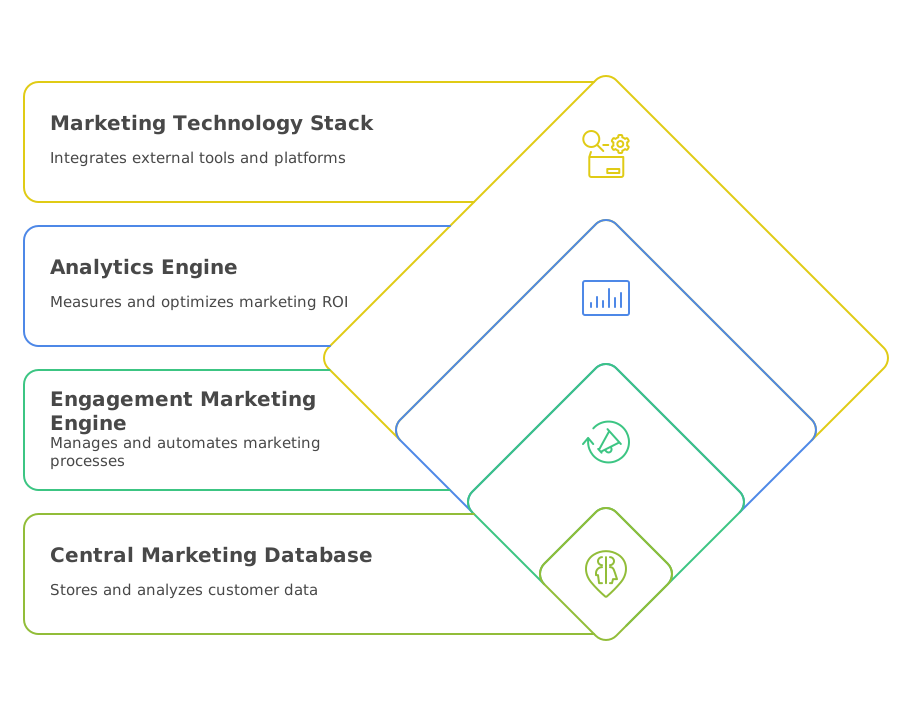
Central Marketing Database
This is the brain!
It stores and analyses all the juicy data about prospective leads, customer interactions, and user behaviour.
Engagement Marketing Engine
This is where the action happens!
You create, manage, and automate your marketing processes right here.
Analytics Engine
Time to check the scoreboard!
This is where you test, measure, and optimise your marketing return on investment (ROI) and revenue impacts, spotting areas ripe for improvement.
Marketing Technology Stack (MarTech stack)
This is your toolkit, a collection of any other applications you use to achieve your marketing goals, like SaaS platforms, social media tools, and content management systems.
The benefits are phenomenal:
| Higher Conversion Rates | By ensuring your content reaches interested customers and crafting engaging messages. |
| Improved Workflow | It identifies bottlenecks and streamlines processes by assigning and tracking tasks, sending alerts, and automating schedules. |
| Increased Productivity | Freeing up your amazing employees from tedious tasks so they can focus on more important, exciting work. |
| Personalised Buying Journey | Collecting data to tailor content to each customer based on their behaviour and information. |
| Higher-quality Leads | Using unique lead scoring systems to identify leads most likely to convert. |
| Automated Interactions | Keeping you connected with customers throughout the buying cycle. |
| Segment Customer Base | Dividing your customer base for incredibly personalised engagement. |
| Craft Impeccable Experiences | Using customer insights to improve retention levels. |
Marketing automation allows you to target customers with automated messages across email, web, social, and text. Messages are sent automatically, based on instructions called workflows.
This means you can implement your digital marketing strategy without manually hitting ‘send’ on everything! It’s about identifying your audience, designing the perfect content, and automatically triggering actions based on schedules and behaviour.
And What About CRM ?
Customer Relationship Management (CRM) is your central hub for all things customer!
It’s a fundamental tool for managing complicated business procedures. CRM software handles contact and sales management, agent productivity, and customer relationships across the entire sales funnel. It’s where you store vital customer details like contact information, purchase history, communication preferences, and even notes on phone conversations.
A CRM system collects customer data from multiple sources and consolidates it into one, easy-to-access location. Sales teams then use this data to qualify leads, nurture relationships, and boost sales by offering optimised customer experiences. CRM platforms boast powerful capabilities that let organisations monitor and analyse customer data to produce real-time reports and insights into customer behaviour.
The benefits of a fantastic CRM system are numerous:
| Organization | It automatically tracks and organises contacts after you add basic information, serving as a central repository for all departments. |
| Centralized Sales Progress Tracking | Giving you a view across your entire organisation, identifying areas for improvement, tracking customer journeys, and assigning leads easily. |
| Personalized Communication | Offering tools to tailor messaging based on customer behaviour, needs, and expectations. In fact, 73% of consumers believe businesses should understand their personal needs and expectations. |
| Centralized Customer Data | Providing a holistic view of each customer to tailor marketing efforts. |
| Customer Segmentation | Allowing you to divide your audience into groups for targeted campaigns. |
| Automated Campaigns | Setting up campaigns triggered by customer actions, ensuring timely and relevant communication. |
| Proactive Customer Support | Tracking interactions and recognising potential issues before they escalate. |
| Loyalty Programs and Rewards | Creating personalised programs based on customer behaviour to encourage repeat business. |
Popular examples of CRM systems include Salesforce, HubSpot, Freshsales by Freshworks, and Pipedrive.
Suggested reading:
4 Types of Digital Marketing Explained: Choosing the Right Approach for B2B and B2C Success
The Ultimate Power Couple: How CRM and Marketing Automation Work Together
Individually, CRM and Marketing Automation are fantastic tools, but together?
They are unstoppable!
While CRM primarily focuses on sales and managing existing customer relationships, marketing automation excels at lead generation, nurturing, and engaging audiences at scale.
Integrating your marketing automation tools with your CRM means you can share all the incredible information collected from customer and lead interactions directly with your marketing team.
CRM acts as a powerful sales tool and a goldmine of data that can dramatically improve your marketing campaigns, helping you target the audience most likely to drive revenue.
Here’s how this dream team works in tandem:
- Build Relationships Before Sales: Nurturing leads with targeted content and personalised experiences using marketing automation before handing them off to sales.
- Closed-Loop Reporting: Getting the full picture of what’s working and what isn’t by tracking leads from initial engagement to conversion.
- Assign Lead Scores: Automatically scoring leads based on their engagement and likelihood to convert, allowing sales to focus on the hottest prospects.
- Seamless Customer Journey: Providing a smooth, consistent experience as a lead moves from visitor to loyal customer.
- Full Picture for Sales: Sales reps gain a complete view of a lead’s journey and interactions with the company.
- Consistent Messaging: Ensuring unified and supportive communication across all touchpoints.
This powerful integration enables companies to gather and process customer information, perform marketing operations, and interact with customers based on their needs and desires. This combination helps businesses deliver the right marketing messages, enhancing customer interaction and, in turn, increasing sales and customer satisfaction. It helps optimise marketing efforts by identifying factors influencing customer behaviour and purchase decisions.
Integrating CRM and marketing automation transforms your business by saving time and resources, improving lead generation and nurturing, enhancing customer experience, increasing conversion rates, and providing data-driven insights for more targeted campaigns.
Is Your MarTech Stack Ready for 2025?
Integrate your marketing tools, automate omnichannel campaigns, and leverage data-driven insights to deliver highly personalized customer journeys at scale. Empower your team with a unified MarTech ecosystem that optimizes performance, maximizes ROI, and drives sustainable growth.
Making the Magic Happen: Implementation and Best Practices
Getting your CRM and Marketing Automation systems to work together perfectly requires a smart strategy. Here are some hot tips for a successful integration and boosting engagement:
Define Your Goals
Before you start, know exactly what you want to achieve!
What are your objectives for integration?
What metrics will define success?
Clearly defined goals help track performance and eliminate roadblocks.
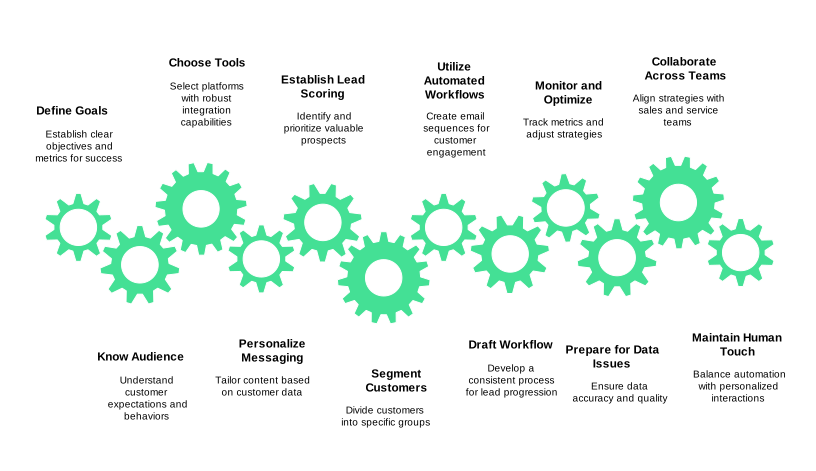
Know Your Audience
Understand who you’re talking to and what they expect. Leveraging data and research to shape targeted messaging is crucial. Use customer data and behaviour tracking to create targeted campaigns that resonate.
Choose the Right Tools
Selecting platforms that integrate seamlessly is key!
Look for tools that offer robust integration capabilities. Some platforms, like HubSpot, are designed as all-in-one solutions with integrated CRM and marketing automation.
BotPenguin, for example, aces CRM integrations with popular platforms like ZOHO, Hubspot, Salesforce, and more.
Personalise Messaging
Use the wealth of data from your CRM to hyper-personalise your marketing and sales messages right from the start. Tailor content based on demographics, purchase history, browsing behaviour, and more. Dynamic content creation in CRM marketing automation allows messages to change based on customer information.
Establish Lead Scoring
Implement lead scoring to identify your most valuable prospects. This helps sales teams prioritise follow-ups and ensure timely responses, which significantly increases the likelihood of conversion.
Segment Customers
Divide your customer base into specific segments based on shared characteristics like demographics, interests, or purchasing behaviour. This allows you to send highly targeted and personalised campaigns.
Utilise Automated Email Workflows
Create automated email sequences for onboarding new customers or nurturing leads. These workflows provide a consistent and engaging experience throughout the customer journey. Automated email marketing can deliver targeted content, personalised recommendations, and timely updates.
Draft a Workflow
Create a consistent workflow with specific triggers that move leads through the marketing funnel.
Monitor and Optimise
Don’t just set it and forget it!
Continuously track key engagement metrics like open rates, click-through rates, conversion rates, bounce rates, and unsubscribe rates. Analyse campaign performance, look for patterns, and make data-driven adjustments to optimise your strategies.
Prepare for Data Quality Issues
Bad data can sink your efforts.
Ensure data is accurate and up-to-date through cleaning, integration, and segmentation practices.
Collaborate Across Teams
Your marketing automation strategy will impact sales, service, and other teams.
Get their input and buy-in to ensure alignment and a unified customer experience.
Don't Lose the Human Touch
Automation is powerful, but combining it with human interaction is key to success.
Avoid over-automating everything. Use automation to handle repetitive tasks, freeing up your team for more personalised, complex interactions.
Suggested reading:
Optimise Your B2B and B2C SEO Strategy for 2025: Google Gemini’s Role in Shaping Search Results
Navigating the Road Ahead: Potential Challenges
While the possibilities are endless, it’s important to be aware of potential hurdles when implementing marketing automation and CRM integration:
| Complexity | Platforms can be complex and require some technical expertise. Adequate training and support are crucial. |
| Data Quality | Poor data quality can lead to failed campaigns and wasted resources. Maintaining clean, accurate data is vital. |
| Lack of Personalization | Despite the tools, crafting truly tailored messaging can be challenging without enough data or effective segmentation. |
| Overreliance | Becoming too dependent on automated processes can lead to missed opportunities for high-value interactions. |
| Inadequate Content | A steady stream of high-quality, relevant content is essential for effective campaigns. |
| Ineffective Strategy | Implementing tools without a clear overarching strategy can lead to disjointed efforts and low ROI. |
| Resistance to Change | Adopting new technology requires a shift in mindset and processes, which can sometimes face internal resistance. |
| Eliminating Duplicates | Ensure your systems aren’t creating duplicate tasks or data entries, which can frustrate customers and skew reporting. |
Being prepared for these challenges with a solid plan and a commitment to continuous improvement will help you overcome them!
Seeing is Believing: Examples in Action
Many businesses are already leveraging the power of marketing automation and CRM integration to achieve fantastic results!
While specific examples of integrated CRM and MA are not explicitly detailed in the provided sources, we can look at success stories from companies using these technologies:
- SmartBear Software: This company reportedly saw their lead volume grow by 200% after implementing marketing automation software for personalised email campaigns and lead nurturing.
- Sephora: Used Smart Shopping campaigns that automated aspects like prospecting and remarketing, resulting in 20% higher conversions.
- Salesforce: Offers a “#1 AI CRM” that integrates CRM + AI + Data + Trust. They also offer their own Marketing Cloud and integrate with many marketing automation platforms via the AppExchange.
- HubSpot: Offers a free CRM tool and is described as an all-in-one platform with robust CRM and marketing automation capabilities across multiple hubs. They aim to make marketing automation easy to use with intuitive interfaces and drag-and-drop functionality.
These examples demonstrate the tangible benefits that can be unlocked when businesses embrace automation and smart customer data management.
Is Your Email Marketing Driving Conversions in 2025?
Design, automate, and optimize targeted email campaigns that nurture leads and delight subscribers with personalized, timely messages. Leverage segmentation, A/B testing, and real-time analytics to boost open rates, clicks, and customer retention.
Ready to Soar?
In an increasingly competitive landscape, marketing automation, especially when fuelled by the rich data from a CRM, is not just a bonus – it’s becoming a requirement for success.
By automating processes and freeing up your teams’ time for deeper, more exciting tasks, you not only get happier employees but also achieve the incredible results you’ve been dreaming of.
Integrating CRM and marketing automation is a powerful strategy to streamline marketing, improve customer engagement, and drive business growth. It allows you to build stronger relationships, enhance customer satisfaction, and ultimately, boost your revenue!
The future is bright, and it’s powered by integrated CRM and Marketing Automation!
Unlock the full potential of integrated systems to streamline workflows, deliver personalized customer journeys, and drive measurable growth across every stage of the funnel.
Start Transforming Your Customer Experience Today.