





In today’s hyper-connected digital landscape, API management software is the backbone of modern enterprises—ensuring seamless integration, robust security, and deep insights across hundreds of services. When implemented strategically, it empowers businesses to connect applications, drive innovation, and scale operations with confidence.
What Is API Management Software?
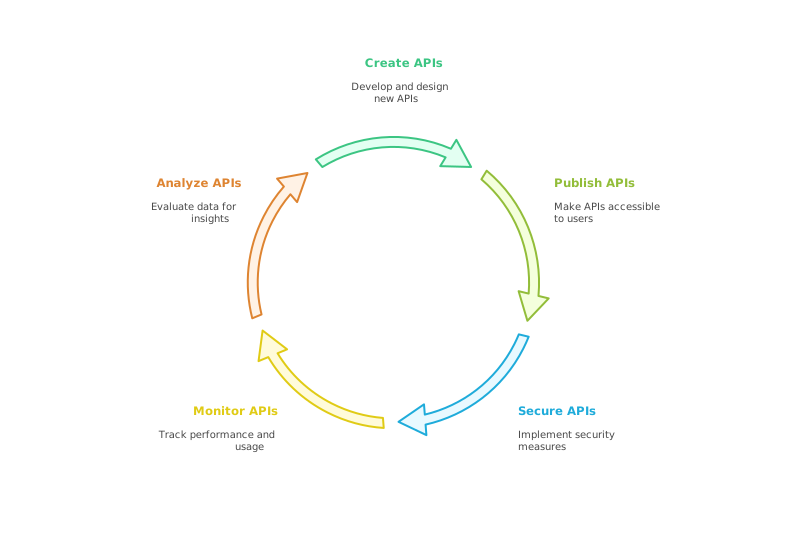
API management software is a centralized platform designed to create, publish, secure, monitor, and analyze your Application Programming Interfaces (APIs). By offering a unified dashboard, an API gateway, and developer tools, it transforms disparate API endpoints into a cohesive ecosystem. This not only streamlines communication between microservices, third‑party apps, and legacy systems but also accelerates digital transformation initiatives.
Key capabilities include:
API Gateway
Acts as a single entry point for routing, throttling, and enforcing security policies.
Developer Portal
Analytics & Reporting
Tracks usage metrics, error rates, and performance trends in real time.
Lifecycle Management
Automates versioning, deployment, and graceful deprecation.
Security Controls

Suggested reading:
The Importance of API Management for Business Scalability in 2025: Key Trends and Benefits to Watch For
API Management Software: Top Features to Look For
When evaluating API management tools, prioritize solutions that combine flexibility, ease of use, and enterprise-grade security:
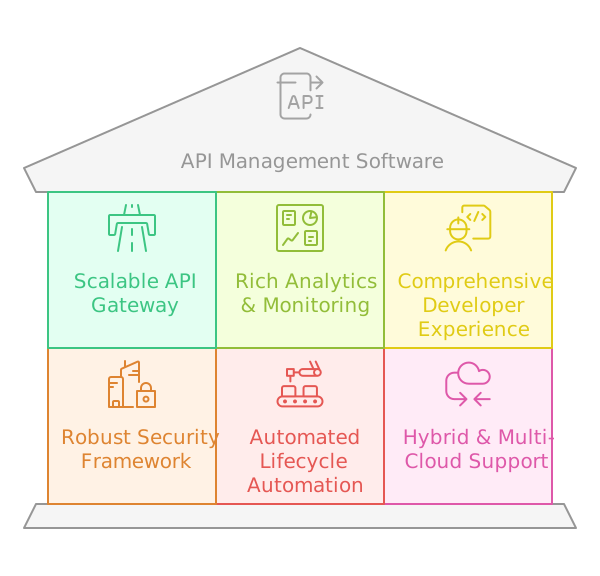
Scalable API Gateway
Your gateway should handle traffic spikes with auto-scaling, offer intelligent routing, and support caching to reduce backend load.
Rich Analytics & Monitoring
Actionable dashboards and customizable reports help you detect anomalies, optimize performance, and forecast capacity needs.
Comprehensive Developer Experience
Self-service portals, SDKs for multiple languages, sandbox environments, and detailed code samples accelerate integration and adoption.
Robust Security Framework
Look for zero-trust architecture, multi-factor authentication, end-to-end encryption, and automated threat detection.
Automated Lifecycle Automation
Support for CI/CD integration, API version management, and changelog tracking ensures continuous delivery and backward compatibility.
Hybrid & Multi-Cloud Support
Whether on-premises, in a private cloud, or across public cloud providers, your API management software must adapt to diverse infrastructures.
Is Your Business Ready for Seamless, Scalable Microservices Integration?
Transform your monolithic applications into agile, modular systems with expert microservices integration that accelerates development cycles and enhances system resilience. Leverage container orchestration, API gateways, and service mesh solutions to ensure each component communicates flawlessly—and scales independently as your demands grow.
Benefits of API Management Software
Adopting a mature API management platform delivers measurable ROI across IT and business teams:
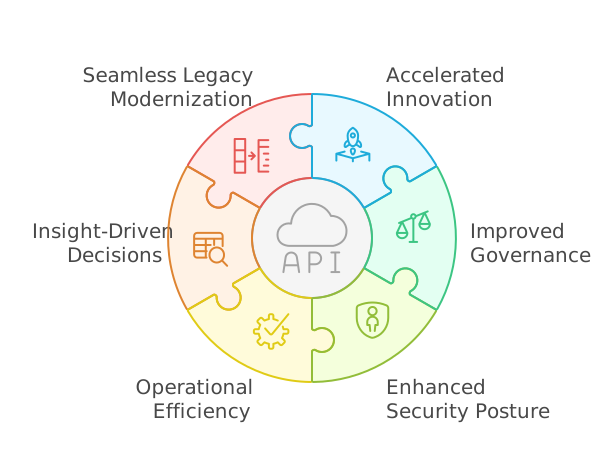
Accelerated Innovation
Rapidly expose new services to partners and developers, reducing time-to-market by up to 50%.
Improved Governance
Centralize policy enforcement to ensure consistent authentication, authorization, and compliance.
Enhanced Security Posture
Mitigate risks with proactive threat detection, rate limiting, and automated audits.
Operational Efficiency
Streamline DevOps workflows with automated deployments, standardized templates, and integrated testing.
Insight-Driven Decisions
Leverage API usage analytics to identify revenue opportunities, optimize resource allocation, and prioritize feature development.
Seamless Legacy Modernization
Wrap legacy services with modern APIs to extend lifespan and integrate with cloud-native applications.

Suggested reading:
2025 Scaling Challenges Solved: Why Microservices Architecture is the Ultimate Solution for Performance Bottlenecks
Best Practices for API Management Success
To maximize the impact of your API management software, follow these industry-proven practices:
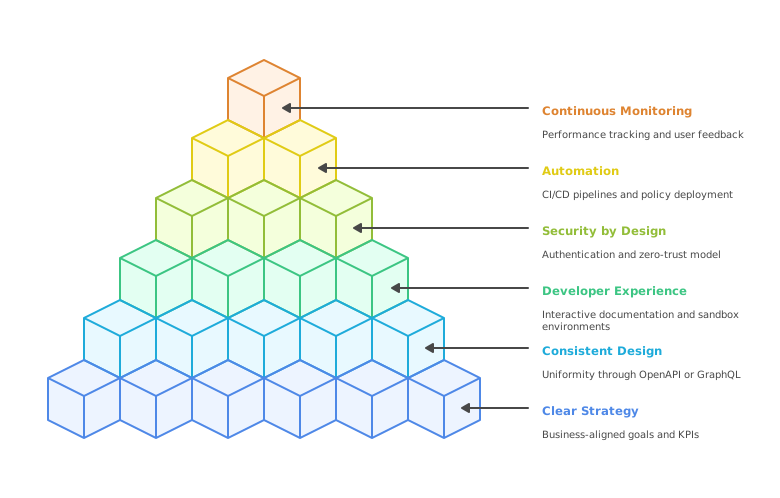
Define Clear API Strategy
Begin with business-aligned goals: internal efficiency, partner enablement, or public API monetization. Establish KPIs like adoption rate, average response time, and error ratios.
Adopt a Consistent Design Standard
Use OpenAPI (formerly Swagger) or GraphQL schemas to enforce uniformity. Comprehensive documentation and linting prevent integration headaches.
Prioritize Developer Experience
Provide interactive documentation, code snippets, SDKs, and sandbox environments. Faster onboarding leads to higher developer satisfaction and retention.
Implement Security by Design
Embed authentication, authorization, and input validation into every layer. Adopt a zero-trust model and regularly audit for vulnerabilities.
Automate Everything
From CI/CD pipelines to policy deployment and version management, automation reduces human error and boosts release velocity.
Continuously Monitor & Iterate
Track performance, availability, and user feedback. Use canary deployments and A/B testing to roll out changes with minimal risk.
Is Your Business Ready for Unified, Automated Tools Integration?
Streamline your operations and eliminate data silos by connecting CRM, ERP, marketing automation, and analytics into one cohesive ecosystem. From real-time data syncing to custom API connectors, ensure every department has the insights and workflows they need to drive productivity and growth—without manual handoffs.
Leading API Management Platforms
Here’s a quick comparison of popular API management tools to help you choose the right fit for your organization:
| Platform | Strengths | Ideal Use Case |
|---|---|---|
| MuleSoft Anypoint | Enterprise-grade governance, rich connectors | Large-scale integration projects |
| Google Apigee | Advanced analytics, hybrid deployment | Data-driven API strategies |
| Microsoft Azure API Mgmt | Deep Azure integration, auto-scaling gateway | Microsoft-centric environments |
| Tyk | Lightweight, open-source, multi-cloud | Budget-conscious and flexible teams |
| IBM API Connect | DevOps-friendly, strong security focus | Regulated industries |
| Boomi | Low-code integration, event-driven workflows | Rapid automation and orchestration |
How to Measure Success
Tracking the right metrics ensures your API management initiative delivers value:
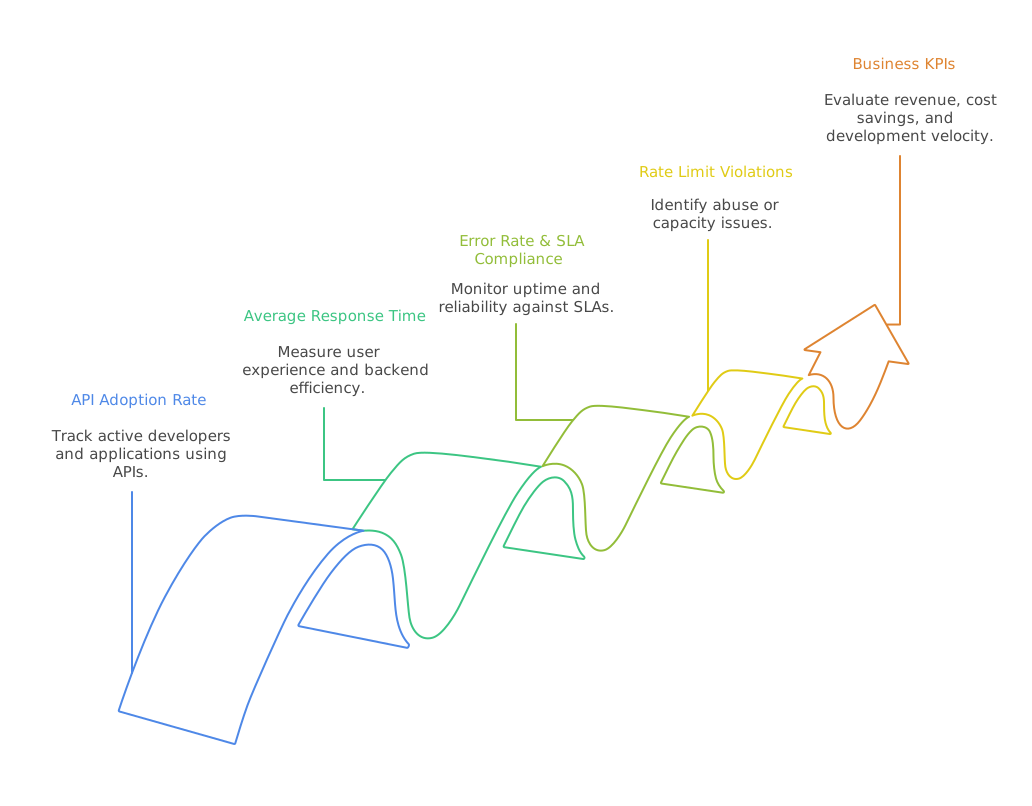
API Adoption Rate
Number of active developers and applications using your APIs.
Average Response Time
Measures user experience and backend efficiency.
Error Rate & SLA Compliance
Monitors uptime and reliability against defined SLAs.
Rate Limit Violations
Indicates possible abuse or capacity shortcomings.
Business KPIs
Revenue tied to API consumption, cost savings from automation, and development velocity improvements.
Your Future, Powered by APIM!
API management is truly fundamental for driving innovation and maintaining a competitive edge. As organisations continue their incredible journey of digitalisation, APIM solutions are becoming increasingly valuable for seamless collaboration, streamlined operations, and staying ahead of the curve.
By embracing API management, you’re not just organising your APIs; you’re unlocking their full transformative power. You gain incredible agility, empower workflow automation, fuel data-driven growth, ensure robust security, and create an outstanding developer experience. This isn’t just about managing software; it’s about making your organisation more responsive, more insightful, and ultimately, more successful.
So, are you ready to provide that seamless user experience, propel your business forward, and truly future-proof your API ecosystems? API management is the key, enabling secure integration and communication between applications and services in our wonderfully interconnected world! It’s an exciting journey, and API management is here to make sure you enjoy every mile.
Empower your digital ecosystem with a unified platform that secures, monitors, and scales every API—eliminating fragmented tools and manual overhead. Discover how the right API management solution can boost developer productivity, strengthen security, and drive sustainable business growth.

Frequently Asked Questions
What problems does API management software solve?
API management software addresses challenges like inconsistent security policies, traffic spikes, and lack of visibility by providing a single point for routing, rate limiting, and monitoring all your APIs. It streamlines governance and ensures reliable performance under varying loads.
How do I choose the right API management software for my business?
Compare platforms based on factors such as gateway scalability, ease of developer onboarding, analytics depth, and hybrid‑cloud support. Prioritize solutions that align with your existing tech stack and compliance requirements to minimize integration friction.
What is the typical pricing model for API management platforms?
Most vendors offer tiered subscription plans based on API calls, user seats, or feature bundles—ranging from free community editions to enterprise packages with premium support. Evaluate your expected traffic volume and required SLAs to estimate costs accurately.
Which teams benefit most from implementing API management software?
Development, DevOps, and security teams gain the biggest advantages—developers enjoy self‑service portals and SDKs, DevOps teams automate deployments, and security teams enforce policies centrally. Business units also benefit from faster partner integrations.
How long does it take to implement API management software?
Simple deployments can be up and running within days using prebuilt templates and connectors, while complex, multi‑cloud integrations typically span several weeks. A phased roll‑out—starting with critical APIs and expanding—helps accelerate time to value.


