





APIs are truly the backbone of modern software systems. Whether you’re crafting microservices, setting up mobile backends, or integrating with third-party services, having a solid API management strategy is absolutely critical for ensuring your system is scalable, secure, and wonderfully efficient. Let’s explore how the right tools can help you simplify, secure, and supercharge your API journey!
What Are API Management Tools?
So, what exactly are these powerful API management tools? Simply put, they are platforms designed to simplify the entire process of creating, publishing, securing, and managing your APIs. These incredible tools allow you to create and manage APIs that expose your digital assets and services to internal and external developers, partners, and customers in a secure and scalable way. They truly simplify the process of managing complex APIs, making your life so much easier!
The Benefits of Using API Management Tools
The advantages of embracing API management tools are truly fantastic!
They provide a range of benefits, including improved security, enhanced collaboration, and better API performance. These tools are absolutely crucial for supporting the growth of your business because they ensure your APIs are secure and reliable.
Imagine drastically speeding up your development process, significantly reducing errors, and enjoying much smoother communication between your development teams! That’s the power of an API management platform! It empowers you to deliver high-quality APIs faster and with incredible ease.

Suggested reading:
The Importance of API Management for Business Scalability in 2025: Key Trends and Benefits to Watch For
Types of API Management Tools
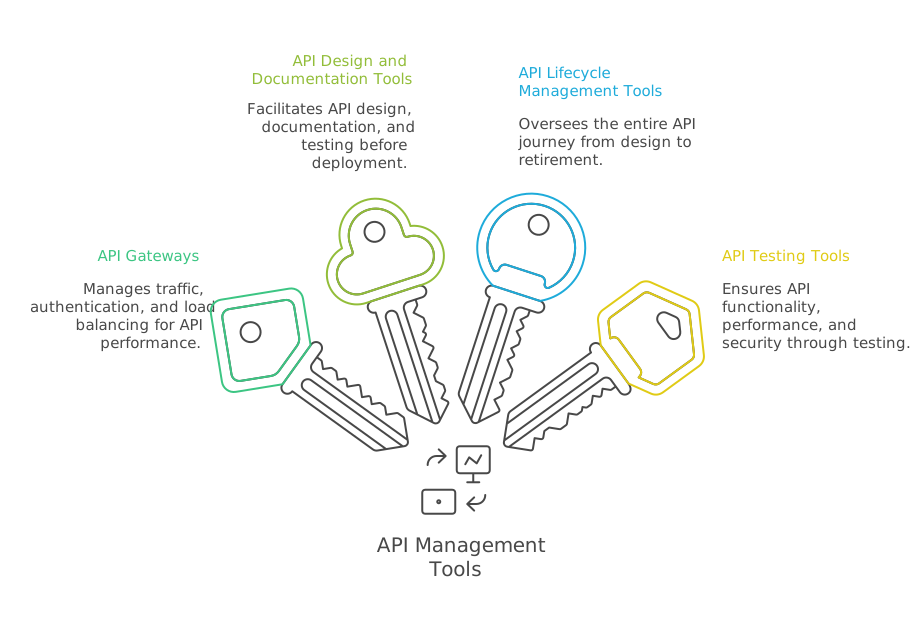
When it comes to API management, you’ve got several exciting types of tools at your disposal, and you might even choose to combine them based on your unique business needs:
API Gateways
Think of these as the ultimate traffic controllers! They manage authentication, authorization, and efficiently route traffic to the appropriate backend services. An API gateway also ensures load balancing, spreading API requests across servers to maintain high availability and prevent overload, ultimately enhancing the performance and reliability of your API ecosystem.
They can even perform protocol transformation, allowing different services to interact despite using diverse protocols. This is especially crucial in complex environments with various legacy systems.
API Design and Documentation Tools
These gems help developers design, document, and thoroughly test APIs before they’re even deployed! This “API-first” approach is truly a game-changer, allowing you to build services around your API, reduce repeated work, and ensure your APIs are fit for purpose.
API Lifecycle Management Tools
These are the complete solutions that help you manage the entire API journey, from initial design all the way to retirement! A well-managed API lifecycle is key to reducing developer churn and supporting long-term system health.
API Testing Tools
These crucial tools help developers test APIs for functionality, performance, and security. They can simulate user behaviour, generate load, and detect bugs, ensuring your APIs are robust and reliable.
Is Your Business Ready to Turbocharge Growth with Smarter Marketing Automation?
Automate lead nurturing, personalize communications at scale, and gain real‑time insights to optimize every campaign—so you spend less time on manual tasks and more on strategy.
10 Top API Management Tools to Consider
Here are the top 10 API management platforms—each distilled into a concise snapshot of its standout strengths:
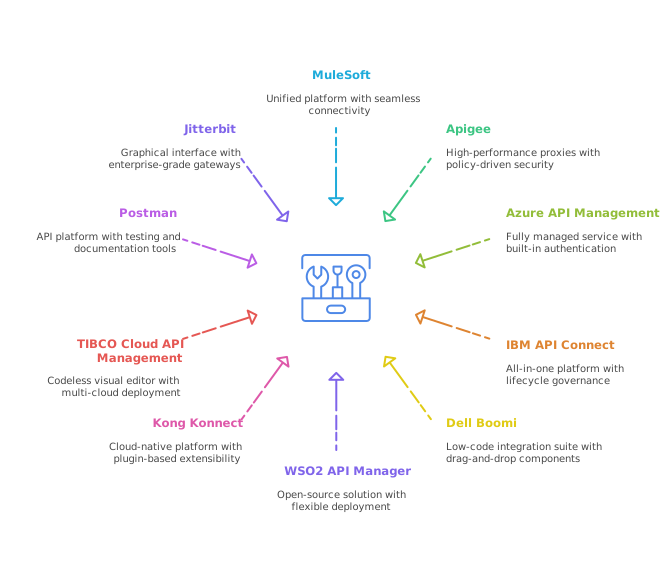
A market‑leading enterprise platform with a unified API gateway and design environment, offering seamless connectivity across on‑premises and cloud systems and powerful analytics for governance at scale.
Native to Google Cloud, Apigee delivers high‑performance API proxies, policy‑driven security, and rich developer portals—backed by real‑time analytics to optimize traffic and detect anomalies.
A fully managed service that publishes, secures, and transforms APIs; features include built‑in authentication, rate limiting, legacy‑to‑REST transformations, and a self‑hosted gateway for hybrid scenarios.
An all‑in‑one platform for creating, managing, and monetizing APIs with robust lifecycle governance, version control, and developer portal capabilities—securely scaling across on‑prem and multi‑cloud.
An intuitive, low‑code integration suite that lets you design, publish, and govern APIs from any system—on‑prem or cloud—while automating data flows with drag‑and‑drop components.

Suggested reading:
2025 Scaling Challenges Solved: Why Microservices Architecture is the Ultimate Solution for Performance Bottlenecks
An open‑source solution supporting OpenID Connect, OAuth, and JWT flows, it offers flexible deployment (including containerized), fine‑grained policy enforcement, and built‑in analytics for full‑lifecycle control.
A cloud‑native, SaaS‑first platform with a distributed, lightweight gateway architecture—enabling consistent policy application, plugin‑based extensibility, and multi‑environment governance.
Provides a codeless visual editor for API design (OpenAPI/AsyncAPI), multi‑cloud deployment options, and robust monitoring—ideal for rapid prototyping and enterprise rollouts without writing code.
More than a testing tool, Postman’s API platform supports design, mocking, automated testing, and documentation with scriptable workflows and built‑in charting—streamlining both individual and team‑based API projects.
Combines a graphical interface for rapid API creation with enterprise‑grade gateways, enabling point‑and‑click data mapping, high‑throughput performance, and swift time‑to‑market for new integrations.
Is Your Business Ready to Unify Data and Workflows Across Every Tool You Use?
Seamlessly connect CRM, ERP, email, and more to eliminate silos, streamline processes, and empower teams with a single source of truth for faster, smarter decision‑making.
Effectively Manage Your APIs
Managing your APIs truly doesn’t have to be complicated! These amazing API management tools provide features like simplified API generation, robust access management, and comprehensive lifecycle management, which are critical for success. They enhance security and team collaboration, and provide enhanced API performance, ensuring seamless integration between applications.
Get clear cost visibility on licensing tiers, usage‑based fees, and support plans—so you can secure and scale your APIs without unexpected expenses. Discover flexible pricing models and budgeting best practices that empower your team to innovate confidently while keeping costs predictable.

Frequently Asked Questions
What factors influence API Management Service Pricing?
Pricing is typically driven by the number of API calls, data transfer volumes, and feature tiers (e.g., security, analytics, developer portals). Enterprise plans may also include dedicated support, SLAs, and custom integrations. Understanding your usage patterns upfront helps avoid bill shock.
How do usage‑based pricing models work?
Usage‑based models charge you per API call, per million requests, or by data throughput. This aligns costs directly with consumption, making it ideal for unpredictable traffic spikes. Just be sure to monitor usage and set alerts to prevent unexpected overages.
Are there hidden costs in API management services?
Hidden fees can include premium support, custom connectors, gateway add‑ons, and overage charges. Review the fine print on licensing agreements and inquire about rate‑limit extensions or SLA penalties. A clear cost breakdown ensures you budget accurately.
How can I optimize my API management budget?
Start by consolidating APIs on a single platform to reduce per‑endpoint fees and streamline governance. Leverage caching, request throttling, and tiered access controls to minimize unnecessary calls. Regularly review usage reports to identify and retire under‑utilized endpoints.
What support and SLA options affect pricing?
Standard plans often include community forums and basic email support, while premium tiers offer 24/7 phone support, dedicated engineers, and stronger uptime guarantees. Higher‑level SLAs with financial credits for downtime will increase your monthly fee but reduce business risk.


